Monday, September 11, 2006

infartillery

No, infartillery doesn't mean what you think it does.

infartillery n. an artillery group capable of acting as infantry. Related: counterspace, bag drag, English, Military

This is one of the delightful definitions from Double-Tongued Word Wrester Dictionary. Created by a lexicographer for Oxford University Press, the Double-Tongued Word Wrester "records undocumented or under-documented words from the fringes of English. It focuses upon slang, jargon, and other niche categories which include new, foreign, hybrid, archaic, obsolete, and rare words. Special attention is paid to the lending and borrowing of words between the various Englishes and other languages, even where a word is not a fully naturalized citizen in its new language."

Beautifully done, academically sound . . . and fun.

99 Undiscovered Web Sites

Logo for PC Magazine articlePC Magazine says, "Think of us as the friends who are always forwarding you links to cool sites you'd never find on your own. That's who we aim to be with this list of 99 Undiscovered Web Sites, and that's who you'll be after reading it.

"The following list is made up of sites that are still flying under the radar, but are useful, funny, or interesting enough to merit entrée into the Web's public consciousness."

Links from PC Magazine:

Friday, September 08, 2006

Stories on Stage

Logo for Stories on StageChicago Public Radio's Stories on Stage "features live dramatic readings of literature by professional actors in a theatrical setting."

If you aren't going to be in Chicago any time soon, then you might wish to check out the program's Audio Library of 90-minute broadcasts of three or four stories linked by a common theme.

Slave Narratives

banner from MoADview from slaving fortressThe Museum of the African Diaspora (San Francisco) features a marvelous online exhibit of Slave Narratives. The exhibit features introductions by Maya Angelou, with actors providing readings from the actual narratives. The site includes transcripts and good resources. Beautifully laid out, Slave Narratives uses interesting Flash technology. (A non-Flash version of the website is available, too.)

Tuesday, September 05, 2006

100 Best Products for 2006

Do you really like Craigslist.org? Does Google Earth boggle your mind? Do you fall to your knees and thank God that you live in the same time and place as YouTube.com? Do you start each day with a solemn pledge to fight the Microsoft hegemony by using Mozilla's Firefox as your exclusive browser? Couldn't live properly without your Apple iPod?

Yeah. We at nHumanities know what you mean. And you aren't alone.

Each year, PC World rounds up the 100 best products: web applications, software, hardware, and games. The items we just mentioned are among those 100. The entire list is a valuable resource for new personal technology, much of it free.

Department of non sequiturs: Take a look at the hynotizing video Noah takes a photo of himself everyday for 6 years at YouTube.com.

Beloit College's Mindset List® for the Class of 2010

typical 18-year-oldEach August, the faculty of Beloit College releases its Mindset List, a list of cultural touchstones which typify the world of the average American 18-year-old. The list for the Class of 2010 includes 75 items that are worth perusing. Here are a few of the highlights:
  • The Soviet Union has never existed and therefore is about as scary as the student union.
  • For most of their lives, major U.S. airlines have been bankrupt.
  • They have grown up getting lost in "big boxes" (i.e., Wal*Marts).
  • There has always been only one Germany.
  • They have never heard anyone actually "ring it up" on a cash register.
  • "Google" has always been a verb.
  • Text messaging is their email.
  • Mr. Rogers, not Walter Cronkite, has always been the most trusted man in America.
  • They grew up in mini-vans.
  • Reality shows have always been on television.

Writing (for the Web)

Flickr photo by Esther G
A List Apart features articles for web site developers. As such, it occasionally addresses the subject of good writing, most recently in Gentle Reader, Stay Awhile; I Will Be Faithful by Amber Simmons.

As it happens, advice on good writing works regardless of the medium--web, personal letters, freshman comp essays, or your grocery list. Here are Simmons's key points:
  • Write for a single reader rather than an audience. Speak to him in an appropriate tone, and treat him as a real person.
  • Tell your reader what he wants to know, even if it bores you to tell him.
  • Provide as much context as possible.
  • Anticipate and answer your reader’s questions.
  • Take your reader on an interesting and well-considered journey into the web.
  • Respect the time your reader chooses to spend with you. Treat him fairly.

Flickr photo How well I could write if I were not here! originally uploaded by Esther_G.

WP's Style Invitational

Each week, The Washington Post holds a word contest called The Style Invitational. In 1998, the Week 266 Style Invitational invited readers to redefine any word from the dictionary. The results, published in the 10 May 1998 Sunday paper include these:
  • Seventh Runner-Up: Carcinoma -- n., a valley in California, notable for its heavy smog.
  • Sixth Runner-Up: Asunder -- adj., supine.
  • Fifth Runner-Up: Esplanade -- v., to attempt an explanation while drunk.
  • Fourth Runner-Up: Willy-nilly -- adj., impotent.
  • Third Runner-Up: Flabbergasted -- adj., appalled over how much weight you have gained.
  • Second Runner-Up: Negligent -- adj., describes a condition in which you absentmindedly answer the door in your nightie.
  • First Runner-Up: Excruciate -- n., the ligament that attaches your ex-wife to your paycheck.
  • Grand winner: Canticle -- n., a modular office space so small and lightless that it saps an employee of all motivation.
Some of the more popular honorable mention entries have lived on in emails and blogs, including some of our favorites:
  • Coffee (n.), the person upon whom one coughs.
  • Abdicate (v.), to give up all hope of ever having a flat stomach.
  • Gargoyle (n.), garlic & oil-flavored mouthwash.
  • Flatulence (n.) emergency vehicle that picks you up after you are run over by a steamroller.
  • Balderdash (n.), a rapidly receding hairline.
  • Frisbeetarianism (n.), The belief that, when you die, your soul flies up onto the roof and gets stuck there.

Blog entry via Harriet

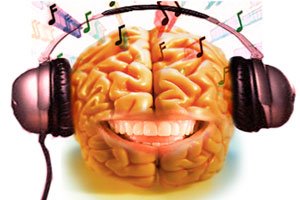
This Is Your Brain on Music


Tuesday morning's Salon.com reviews neuroscientist Daniel Levitin's new book This Is Your Brain on Music: The Science of a Human Obsession (to access the complete article for free, play the brief advertisement). In it, Levitin explains how music represents an essential step in human evolution, but along the way, he explains some other musical mysteries, too.

One such is his explanation of why the music which we love as teenagers stays with us as no other music does. Salon.com reviewer Farhad Manjoo explains Levitin's theory:

Humans prefer music of their own culture when they're toddlers, but it's in our teens that we choose the specific sort of music that we'll love forever. These years, Levitin explains, are emotional times, "and we tend to remember things that have an emotional component because our amygdala and neurotransmitters act in concert to 'tag' the memories as something important." In addition, our brains are undergoing massive changes up until the teen years -- after that, the brain structure becomes more fixed, and it begins to prune, rather than grow, neural connections. Consequently it's in our teens that we're most receptive to new kinds of music (in much the same way it's easier to learn a new language when you're young than when you're old).
Another musical mystery that Levitin tackes has the delightful German name ohrwurm or earworm. That's the experience of having an annoying fragment of music stuck in your head: "Alas, Levitin says relatively little research has been done on the phenomenon -- all we really know is that musicians and people with obsessive compulsive disorder are more prone to getting earworms, and that for most people it's small bits of songs, rather than entire songs, that we keep repeating."

You can read the entire review at Salon.com.

Wired News has an interview with Levitin at Music Makes Your Brain Happy.

Friday, September 01, 2006

Partial Truth: The Freshman 15

image from BustedTeesThe GOOD NEWS: According to a host of scientific studies completed since 2000, the average freshman student will not gain 15 pounds.

The BAD NEWS: The average freshman student will gain 6-8 pounds.

According to a recent article in The New York Times, the myth of the freshman 15 began around 1985 in a Chicago Tribune article. The story quickly gained status as gospel. One's common sense said that all-you-can-eat dining halls, prepaid meal plans, unlimited desserts, late-night snacking, and sedentary lifestyles would mean at least 15 pounds of trouble.

Not so. Most recently, a study at Rutgers University found that female students gained an average of 6 pounds, while males added an average 8 pounds.

"Unfortunately, most people fail to gain control of their weight gain from early adulthood," said Stacy Trukowski, assistant director for fitness at Rutgers. "Although gaining an average of 7 pounds is not as alarming as 15, the pounds will surely add up over time."

What to do? Fitness directors at Rutgers suggest the following:
  • Begin a fitness program.
  • Get a workout partner.
  • Improve your eating habits.
More specific eating advice comes from Daphne Oz, a junior at Princeton, who has written The Dorm Room Diet:
Her tips include avoiding sugar cereals and fried food; stocking dorm refrigerators with bite-size goodies like strawberries and baby carrots instead of Diet Coke and ice cream; filling up on fruit and water before attending parties; and preparing for study sessions by brown-bagging snacks like pears and soy crisps so that the midnight munchies won'’t propel you to a vending machine.
The blog Slashfood offers eight more eating tips:
  1. Keep low fat yogurt in the mini fridge.
  2. Trail mix is a good snack to keep on hand instead of candy bars.
  3. Eat breakfast.
  4. Visit the salad bar in the dining hall.
  5. Avoid desserts.
  6. Remember that calories come from drinks, too, like juice, smoothies, and coffee drinks.
  7. Instead of chips, choose low fat popcorn.
  8. Keep some long-lasting fruit on hand, like apples and oranges.