uses the iconic sketch as a "multi-conceptual image" in her introductory anatomy class to illustrate three crucial anatomical concepts: rotation, transparency, and transverse section. Babaian requires her students to draw the image in their notebooks as they watch it take shape on the blackboard.(Click on image for larger version.)
Friday, September 29, 2006
Low Tech . . . and Timeless
X-ray Vision
What interests me about other people's books is the nature of their collection. A personal library is an X-ray of the owner's soul. It offers keys to a particular temperament, an intellectual disposition, a way of being in the world. Even how the books are arranged on the shelves deserves notice, even reflection. There is probably no such thing as complete chaos in such arrangements.
--Jay Parini, Other People's Books, Chronicle of Higher Education, 22Sep06
MONA
Here's another reason to like Nebraska: MONA. The Museum of Nebraska Art (Kearney, Nebraska) has a lovely online display of art by Nebraska artists. Besides featuring a work or two by each collected artist, the online exhibit also includes biographical information and information on each work. (Below, Deborah Murphy's Your Street, Any Street, 1992, acrylic.)Food for Thought Department
McKeachie's Teaching Tips, by Wilbert McKeachie, a classic guide for new teachers which has gone through many editions (I'm quoting here from my battered copy of the ninth), describes the most commonly cited fact about lectures: Research has found that after a lecture "students recalled 70 percent of the material covered in the first 10 minutes, and only 20 percent of the material covered in the last 10 minutes" (so if you insist on continuing to lecture all the time, make sure you speak really loudly during the last 10 minutes).
One study found that if a professor speaks 150 words a minute, students hear about 50 of them; another study determined that students are tuned out of a 50-minute lecture around 40 percent of the time.
--from Beyond Lecturing, James M. Lang, Chronicle of Higher Education, 29Sep06
One study found that if a professor speaks 150 words a minute, students hear about 50 of them; another study determined that students are tuned out of a 50-minute lecture around 40 percent of the time.
Wednesday, September 27, 2006
Test Your Dark Movie Literacy
Warning: Not work safe . . . it eats up the time!
One of Our Favorites: Maurice Sendak
As in many other Sendak books, the plot features a child in peril--here, a little boy who encounters Halloween monsters as he searches for his mommy. And, as usual, the boy saves himself and achieves his quest.
- NPR has a nice audio slide show of Sendak illustrations where Sendak talks about the source of his childhood fears
- An interview with NPR's Steve Inskeep: Why Maurice Sendak Puts Kid Characters in Danger
Monday, September 25, 2006
How to Teach a Dirty Book
Meanwhile, my younger students complained that their parents made off with their Peyton Place copies — not to censor, but to read the forbidden book at last. ("Don’t tell your grandmother.")
In honor of Banned Books Week, nHumanities is pleased to direct you to Emily Toth's wonderful essay on teaching Peyton Place to today's students, 50 years after it was first published: How to Teach a Dirty Book (via Inside Higher Ed).
Saturday, September 23, 2006
Free People Read Freely ®
Both are books which were challenged this year in an American library or school. A "challenge" is when a library receives an oral or written complaint which challenges the presence and/or appropriateness of a book. In other words, some other American, somewhere, thought you shouldn't be allowed to read these books if you want to.
September 23-30 is Banned Books Week's 25th anniversary. Sponsored by the American Library Association (ALA), Banned Books Week . . .
celebrates the freedom to choose or the freedom to express oneÂs opinion even if that opinion might be considered unorthodox or unpopular and stresses the importance of ensuring the availability of those unorthodox or unpopular viewpoints to all who wish to read them. After all, intellectual freedom can exist only where these two essential conditions are met.
This year, Google Book Search celebrates Banned Books Week by putting together a wonderful list of banned books you can read online (or download), including the links to access them.
- ALA's Banned Books web site
- Banned and/or Challenged Books from the Radcliffe Publishing Course Top 100 Novels of the 20th Century
- ALA Office for Intellectual Freedom
- How to Handle Challenges to Library Materials
- Google Blog on Banned Books Week
Friday, September 22, 2006
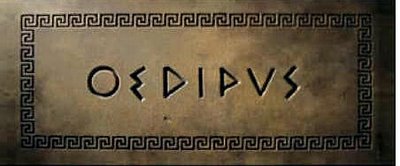
Oedipus (with Vegetables)
Need some culture, but don't have the time? Try this 8 minute video of Oedipus, with a cast comprised entirely of vegetables. The cast includesLaios ..............................Broccoli
Jocasta .....................................Tomato
Oedipus ..........................................Potato
Sheep ....................................Cauliflower
LINK
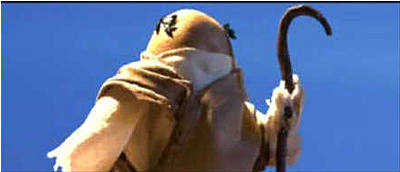
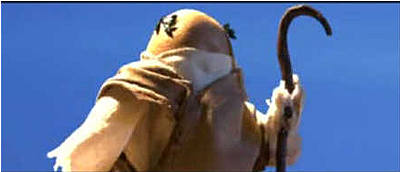
STUDENTS: WARNING. This dramatic adaptation takes a few liberties with the story of Oedipus. Do not use this as a substitute for actually reading the play.
Jocasta .....................................Tomato
Oedipus ..........................................Potato
Sheep ....................................Cauliflower
LINK

Thursday, September 21, 2006
Hispanic Heritage Month
Local activities and television:
- Hinckley Library will showcase items from Spanish-speaking countries and Latino cultures of the U.S. (beginning September 25)
- A film on Hispanics in Wyoming, sponsored by the Northwest College Spanish Club (October 9, 7:00 p.m., FAB 70)
- PBS Visiones: Latino Art & Culture (September 24, 3:00 a.m., KRMA of Denver)
- PBS Los Braceros--Strong Arms to Aid the U.S.A. (September 26, 9:30 p.m., KRMA of Denver)
- Gale - Free Resources - Hispanic Heritage
- US Census Press Releases: Hispanic Heritage Month
- We the People: Hispanics in the United States (PDF, 2000 Census Special Report)
- Hispanic Reading Room (Library of Congress)
- National Park Service: Celebrate Hispanic Heritage Month 2006
- CRM Online (Cultural Resource Management): Exploring Hispanic History and Culture--A Dynamic Field
- Impacto, Influencia, Cambio (everyday people of Latin America and the southwestern US who have affected science and technology)
- PEW Hispanic Center
- REACH: Recursos Para la Enseñanza y el Aprendizaje de las Culturas Hispanas
- NARA: Genealogists/Family Historians - Hispanic Americans
- The History Channel: ¡Hispanic Heritage Month!
Subscribe to:
Posts (Atom)